Outbound calling is still one of the hardest jobs in a UK contact centre. Agents spend much of their day listening to ring tones and voicemail greetings, and the regulators watch closely for silent calls and unwanted automated calls. A good dialler fixes the first problem without creating the second.
This short guide explains the main types of dialler, what changes when an AI voice agent makes the call, and the UK rules you need to get right before you start.
Why UK contact centres are rethinking outbound
The pressure on teams is real. MaxContact’s 2025/26 benchmarking survey of 300 UK contact centre decision-makers found that 52.6% reported rising agent workload, agent attrition was 31.2% and the average cost per call had reached £6.26.
At the same time, appetite for AI is high. In Puzzel’s State of Contact Centres 2026 report, based on 1,505 CX leaders across the UK and Europe, 85% said their organisation is prepared to implement AI, and 78% of contact centres already use AI to analyse customer conversations.
The next step for many teams is letting AI do more of the outbound calling itself, so people can focus on the conversations that need them.
The main types of dialler
| Dialler type | How it works | Best for |
|---|---|---|
| Preview | The agent sees the customer record, then chooses when to dial | High value or complex calls |
| Progressive | Dials the next number automatically as soon as an agent is free | Steady campaigns with no risk of over-dialling |
| Power | Dials a fixed number of lines per agent | Busy teams with lists of mixed quality |
| Predictive | Uses an algorithm to dial ahead of agents becoming free | Large teams and large lists, with careful compliance |
| AI agent dialler | An AI voice agent makes and handles the calls, passing to a person when needed | Reminders, follow-ups, re-engagement and qualification at scale |
Traditional diallers are all about keeping human agents busy. An AI agent dialler changes the maths: every answered call is picked up straight away, so there is no waiting for a free agent and far less risk of a dropped call.
What changes when AI makes the call
- No more abandoned calls from over-dialling. When an AI agent answers every connected call, you are not gambling on agents being free.
- Concurrency becomes the limit, not headcount. The question moves from “how many agents?” to “how many calls can run at once?”
- Every call is logged. Transcripts, summaries and outcomes go straight into your CRM rather than relying on agent notes.
- Smart handoff. Interested customers, complaints and anything sensitive should pass to a person, with the context already on their screen.
- Consent matters more, not less. UK rules treat automated calls very differently from live ones (see below).
The UK rules to get right
This is a summary, not legal advice, so check your own campaigns with a specialist.
Ofcom and abandoned calls. Ofcom treats repeated silent and abandoned calls as persistent misuse under the Communications Act 2003. Its guidance historically set a 3% abandoned call rate over 24 hours, and it now uses that figure to prioritise enforcement rather than as a safe harbour, so any abandoned call can count. Calls should ring for at least 15 seconds, and numbers flagged by answer machine detection should not be called again within 24 hours unless a live operator is guaranteed.
PECR and automated calls. Under the Privacy and Electronic Communications Regulations, automated marketing calls need prior, specific consent. General marketing consent, or consent to live calls, is not enough. The ICO has not issued definitive guidance on conversational AI, so the safe approach is to treat AI marketing calls as automated. The ICO has fined two energy firms a combined £550,000 for unlawful automated marketing calls, so this is not a grey area to test.
TPS and CTPS. Live marketing calls must be screened against the Telephone Preference Service and Corporate TPS unless you have consent.
Be open about AI. Introduce the AI agent at the start of the call, show a valid caller ID and always offer a route to a person.
What to look for in a dialler
- AI voice agents built in, not bolted on through a chain of separate tools.
- Clear concurrency and a price you can forecast at your real volume.
- Consent and suppression controls, including TPS screening and do-not-call lists.
- Pacing and retry rules that keep you inside Ofcom guidance.
- Live handoff to your team with the transcript and reason for the call.
- CRM write-back so every outcome lands where your team works.
- UK GDPR compliance and clear answers on where call data is stored.
Where Vibe Caller fits
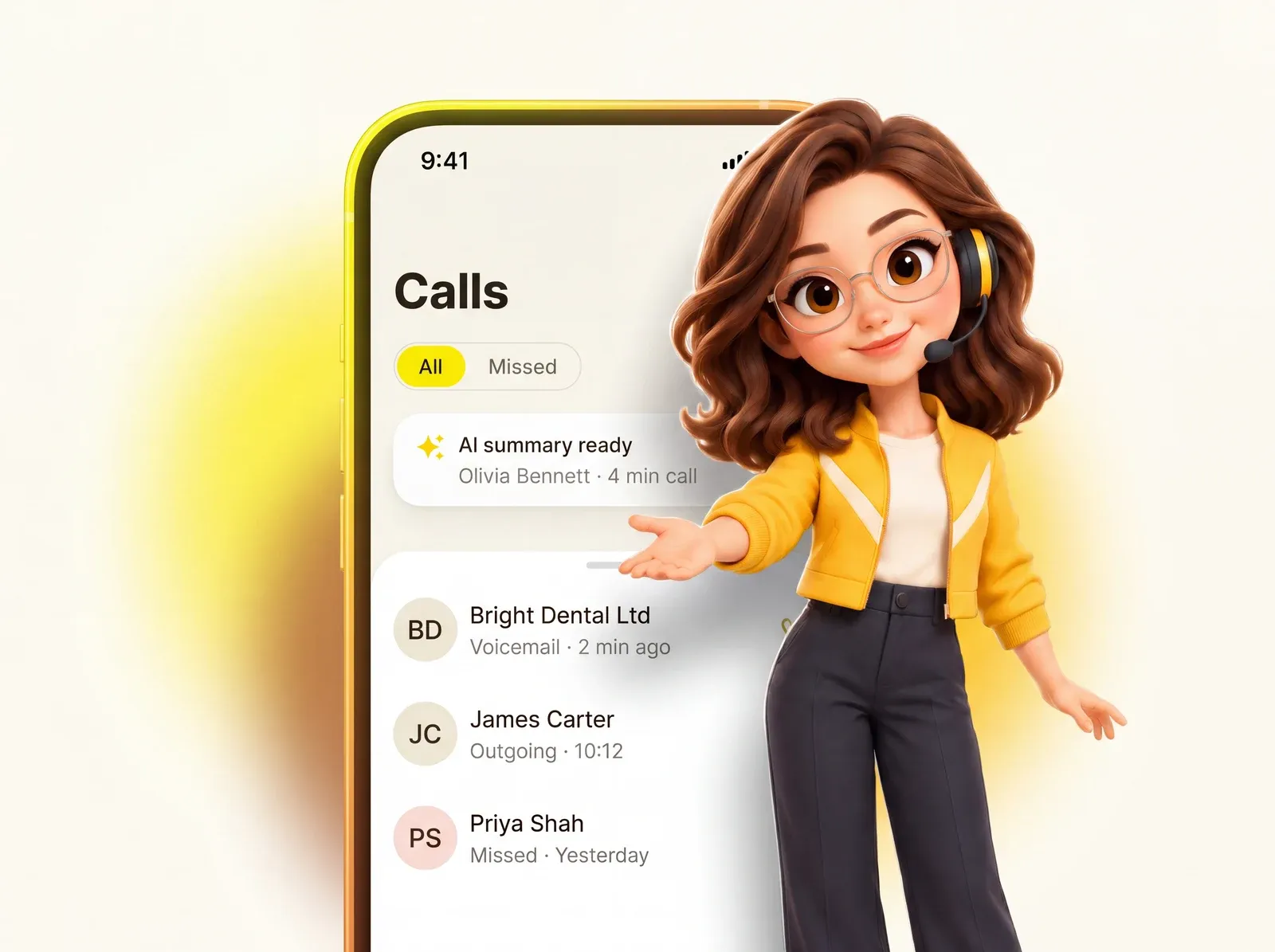
Vibe Caller combines a UK business phone system with Vibi, its built-in AI assistant, and an Outbound Auto Dialler for Enterprise customers. AI agents work through your contact lists on as many lines as a campaign needs, with hundreds of calls running at the same time.
Every call gets a summary and full transcript, urgent or interested customers are flagged, and calls can be passed to your team on any device. Vibe Caller connects with HubSpot, Salesforce, Zoho CRM and Zendesk, is UK GDPR compliant and keeps data in EU-based data centres.
It suits teams that need to re-engage large lists of past customers, chase renewals, confirm appointments or qualify leads, without hiring a room full of agents to do it.
Ready to try it? Book a demo to see the Outbound Auto Dialler in action, or try Vibe Caller free.